Avionics Systems | McGill Rocket Team
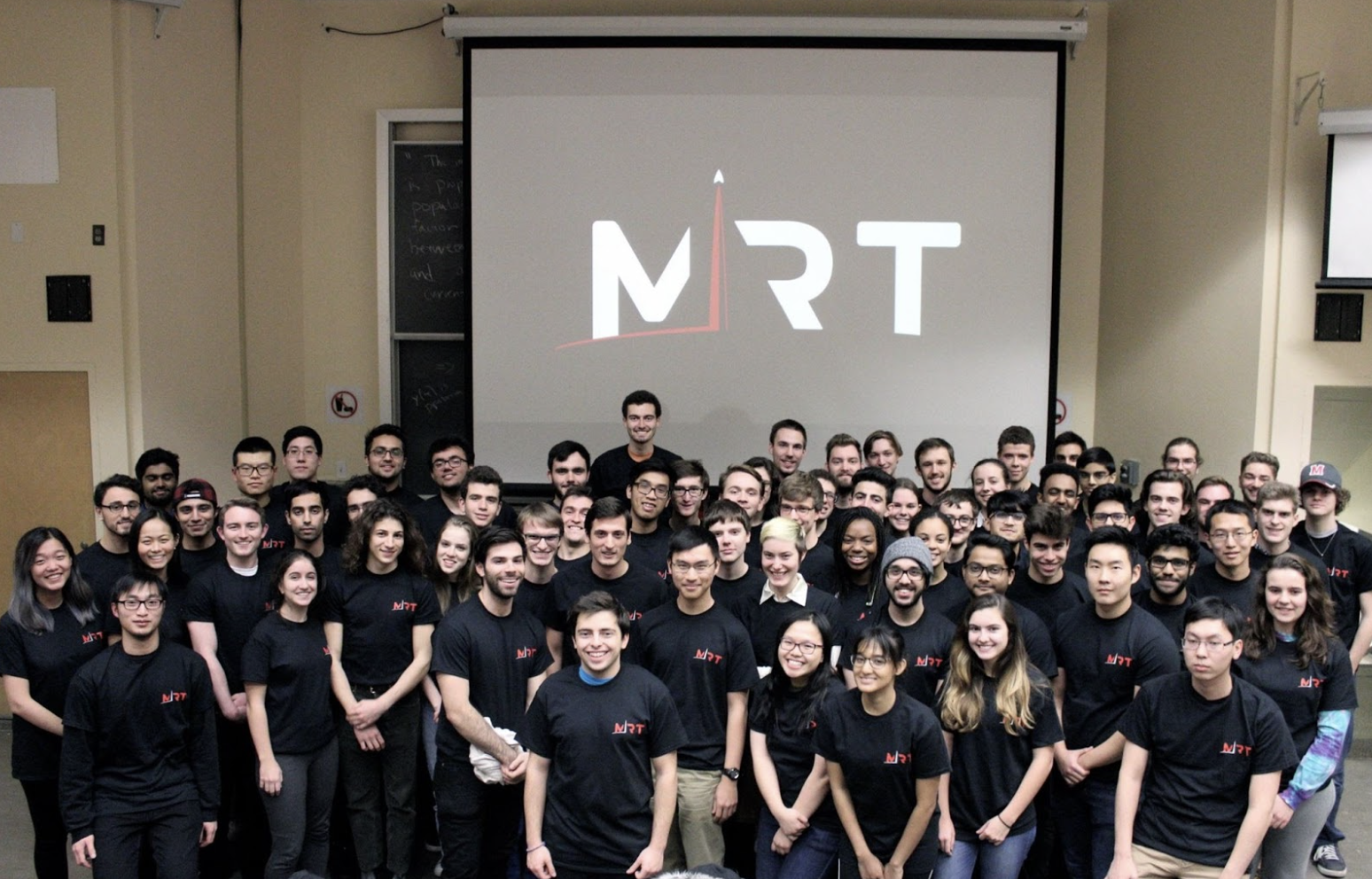
My time with the McGill Rocket Team (MRT) from 2017-2021 was definitely the highlight of my undergrad years, combining engineering, teamwork, and a shared passion for rocketry.
As part of the Avionics subteam, I contributed to designing flight electronics responsible for critical functions such as data acquisition, power distribution, ejection, and real-time telemetry for ground control and recovery.
2017-2018 Design Cycle
As a first year member on the team, I was mainly focused on learning the fundamentals of circuit design and programming while assisting with system testing. The year culminated in MRT’s victory at the Spaceport America Cup 2018 (https://spaceportamericacup.com/portfolio-item/2018-spaceport-america-cup/), which really ignited my deeper interest in engineering.
2018-2019 Design Cycle
Although we won the overall competition the previous year, the avionics system was mostly designed using off-the-shelf components at that point. We decided to transition to a more custom-designed solution and completely overhaul the avionics system, which involved creating the following subsystems:
- RF Radios and Antennas
- Telemetry
- Ejection
- Commercial solutions
- Power Management and Arming mechanism
- Ground-Station
- Video Recorder
Our main objectives were:
- Achieve continuous telemetry throughout the 6.25-minute flight to a 30,000-ft apogee, with a recovery range of 15 km
- Ensure precise ejection timings for drogue and main parachutes
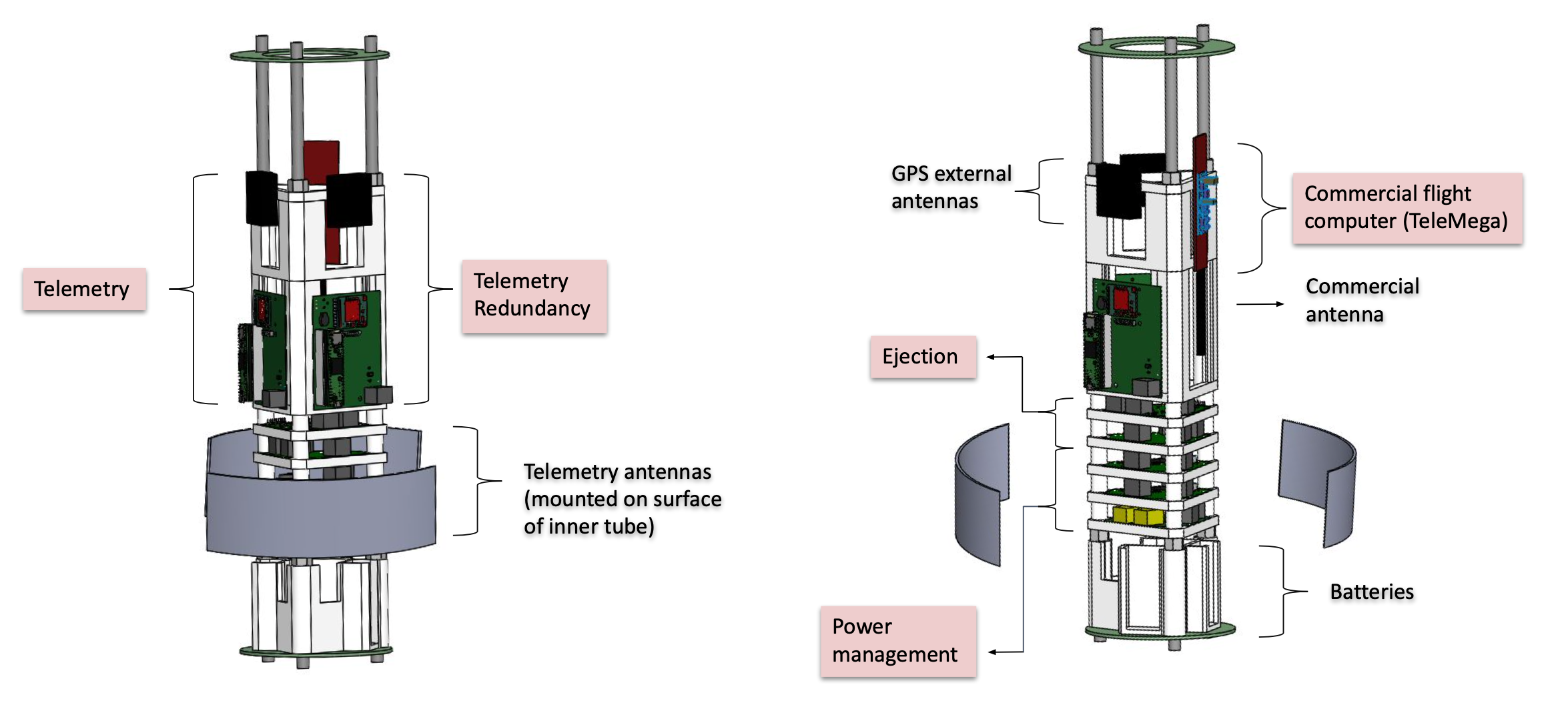
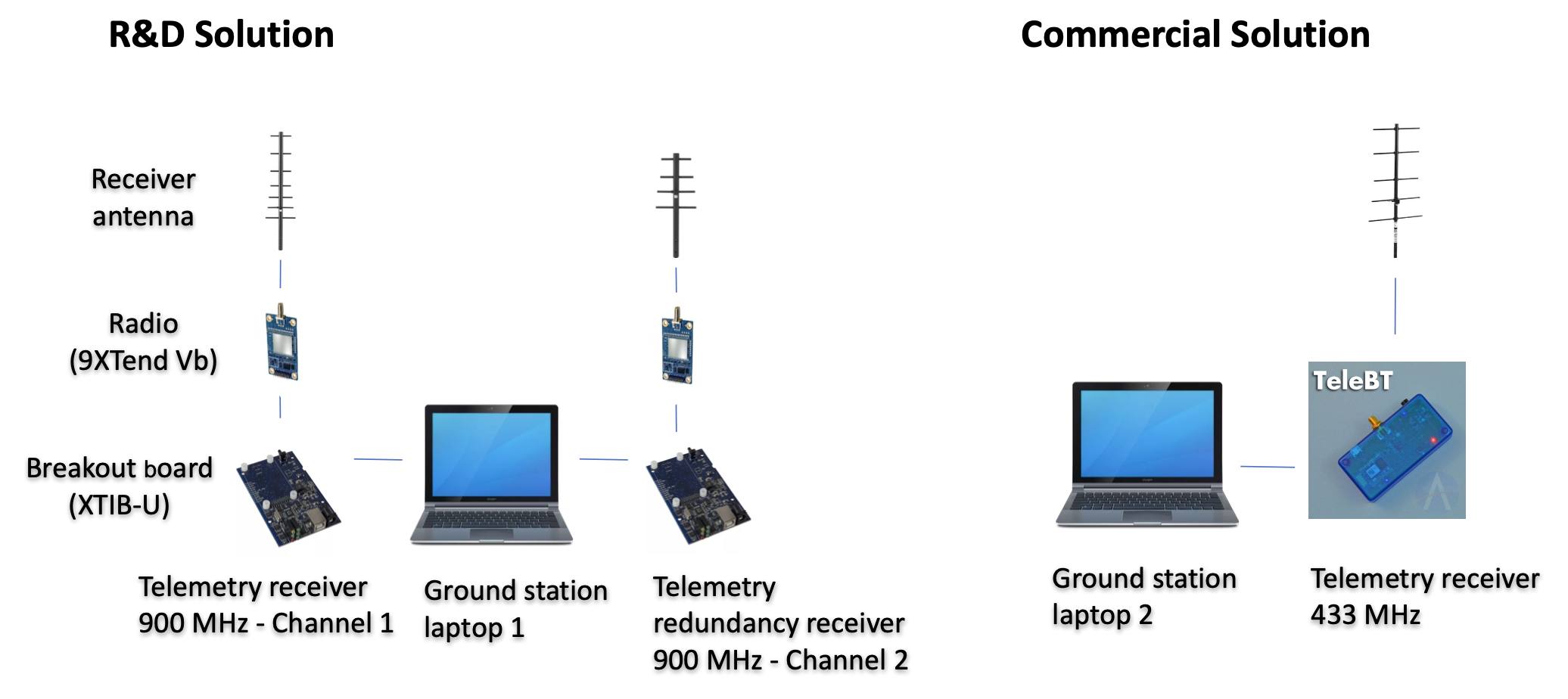
My main contribution this year involved designing the circuitry, logic, programming, PCBs, mechanical housing, testing, etc. for the following systems:
- Telemetry: a Teensy 3.6 microcontroller-based system which reads data from a 9DOF sensor, BME280 pressure sensor, and GPS, and transmits data packets using the XTend vB RF module
- Ejection: an ATMEGA328 microcontroller-based circuit that triggers the main and drogue ejection charges using pressure readings
- Video recorder: a Raspberry Pi Zero-based system to record video from inside the body tube from launch to landing.
Additionally, I helped with conducting transmission tests in an anechoic chamber and range tests around the city.
At the end of the year, I traveled to New Mexico with my teammates and attended the annual Spaceport America Cup competition in-person. Seeing the project launch into the sky in front of my eyes was an extremely rewarding experience and made every hour of effort worthwhile.
2019-2020 Design Cycle
For this cycle, our main focus was on improving the system reliability of the previous design following communication issues during the previous year’s competition. Our priorities included introducing additional redundancies and improving our testing protocols.
Overall, my contributions for this cycle were:
- Led the Flight Computer R&D project that focused on researching embedded development to transition away from Arduino/Teensy and create custom STM32-based boards
- Continued the development and improvement of the Telemetry, Power Management and Video Recorder systems. Optimized the space efficiency by replacing commercial sensors with surface mount versions integrated into the PCBs
- Organized and taught a mechatronics and programming onboarding tutorial series to new members
Unfortunately, due to the COVID-19 pandemic, the annual competition was canceled this year and we could not test our systems in-flight. However, this design cycle laid our a robust foundation for our future projects.

2020-2021 Design Cycle
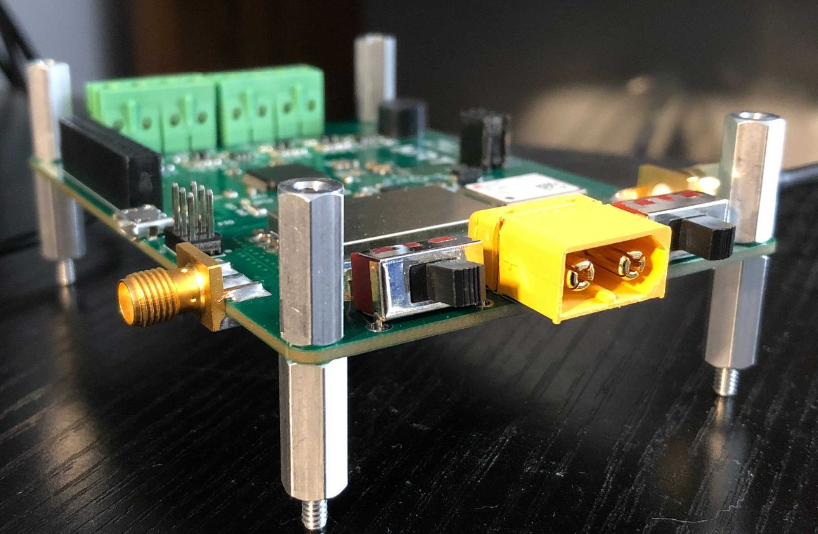
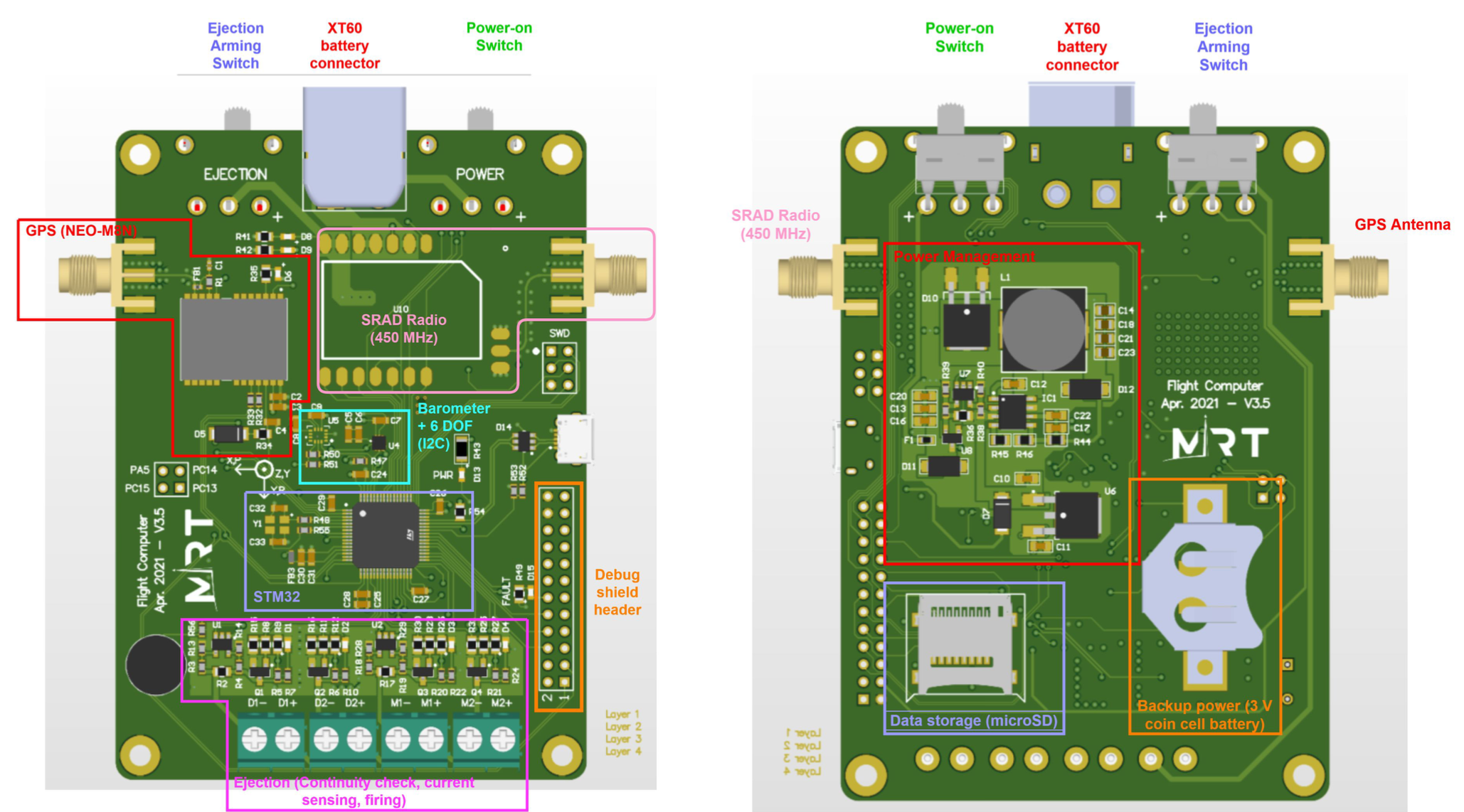
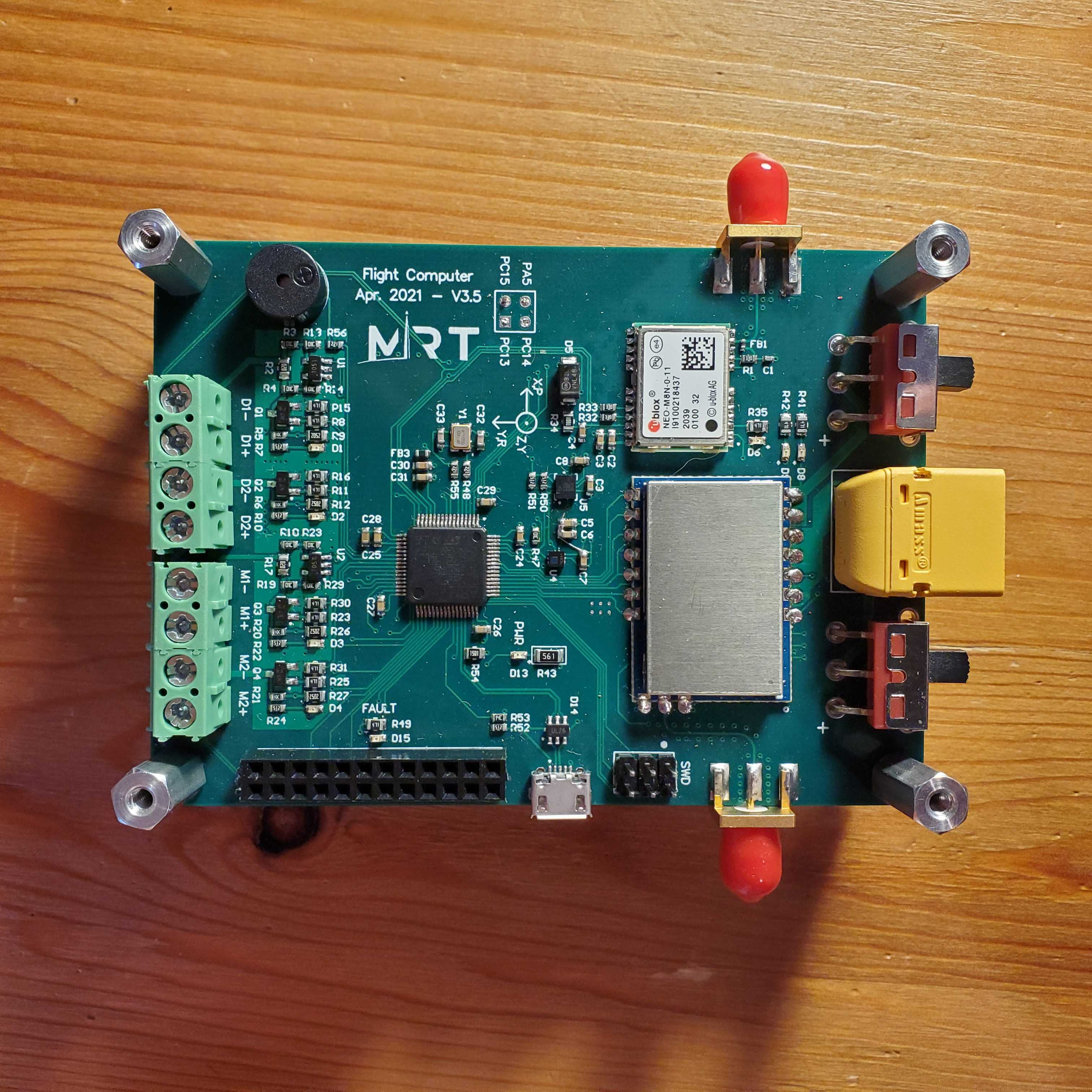
For this cycle, as the Avionics subteam lead, I led the Flight Computer project, which combined the Telemetry, Antennas, Ejection and Power Management systems. Our focus was to create a complete Student Researched-and-Developed (SRAD) board capable of all critical flight functions to improve space efficiency and power consumption.
My key contributions include:
- Implemented STM32 drivers for each of the flight computer peripherals, including sensors, GPS, real-time clock, radios, and SD card reader
- Created circuit breakouts for each of the hardware sensors for testing and integration
- Designed and programmed the flight computer’s logic, running on an STM32F303RE chip with a real-time operating system (RTOS). Specialized threads controlled telemetry, ejection, and other flight-critical functions
- Conducted unit tests on each component, functional tests (eg. pressure chamber ejection testing), range tests, and comprehensive integration tests for system reliability
- Oversaw the onboarding of new members, provided mentorship, conducted meetings and reviews, and resolved internal conflicts to maintain a cohesive subteam
For the Github link to the project: https://github.com/McGillRocketTeam/avionics-2021/tree/FlightComputer
For more details on the Flight Computer project, check out this podium presentation: