Course Project • Highlights
Study Space Finder | CPSC 544 Course Project
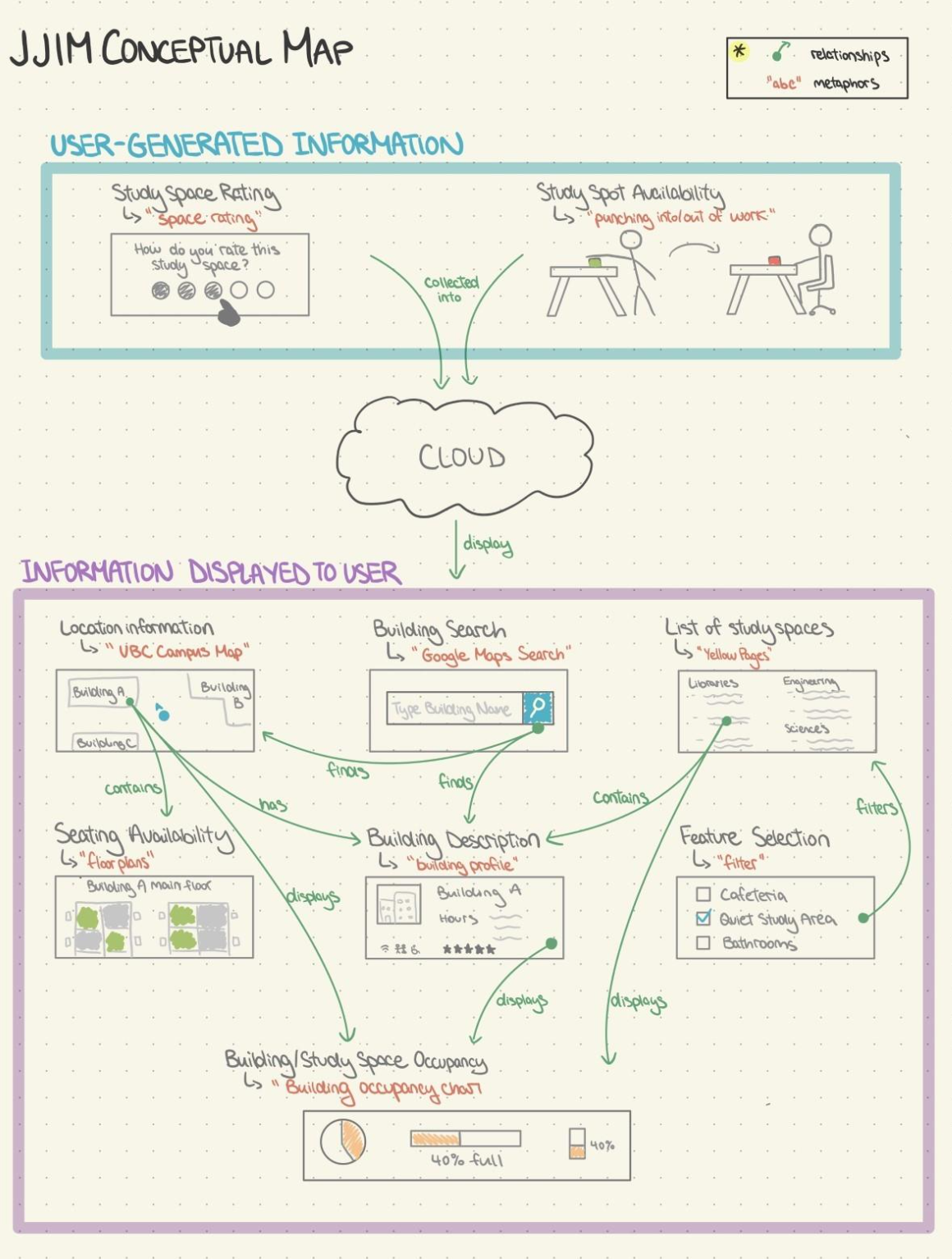
The Study Space Finder app was designed to address the challenges students face when searching for study spaces on campus. By integrating real-time occupancy information, detailed space data, and user reviews into a cohesive mobile experience, the app aimed to save time and enhance productivity for university students.
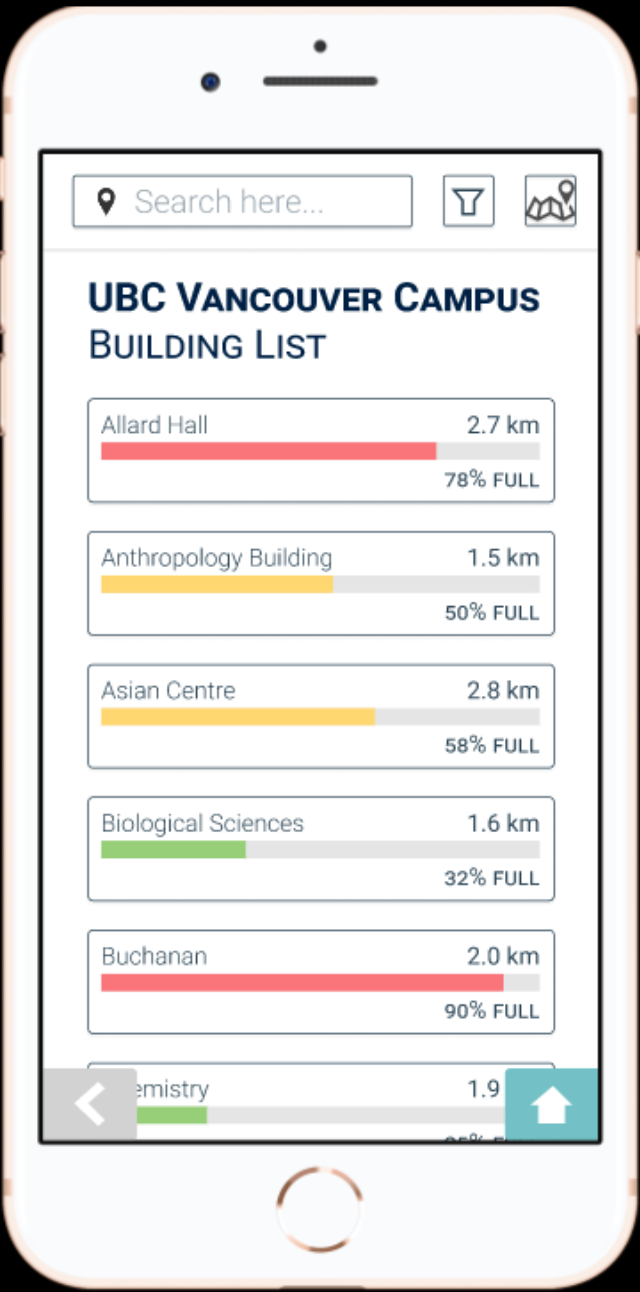
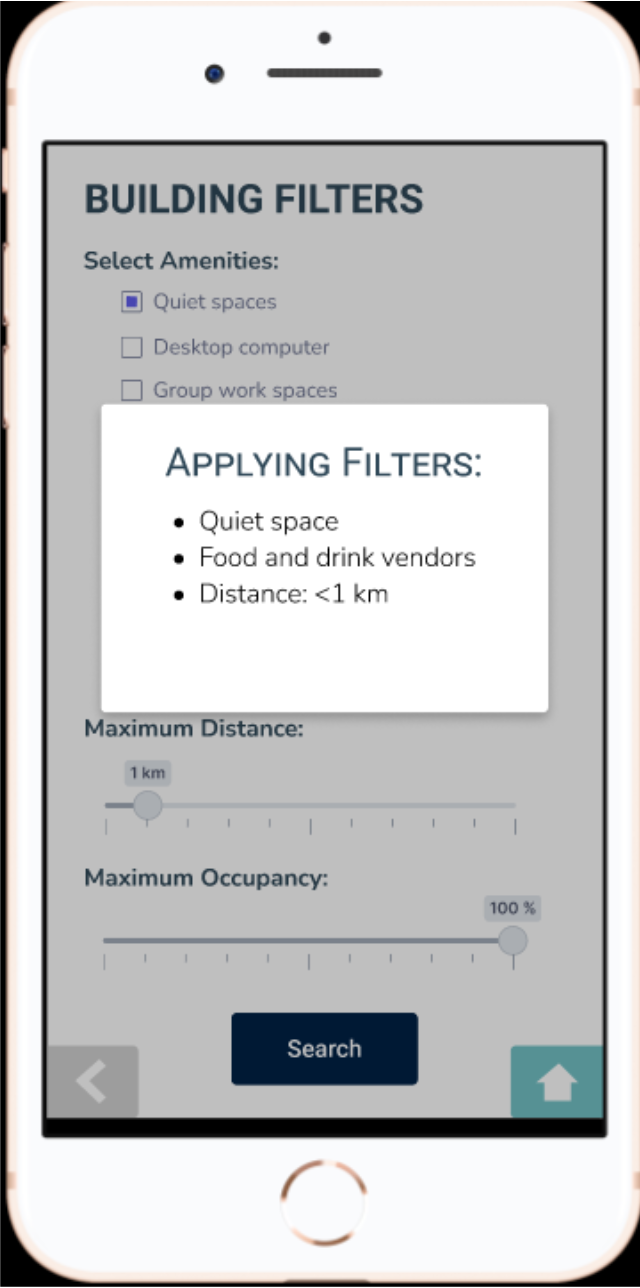
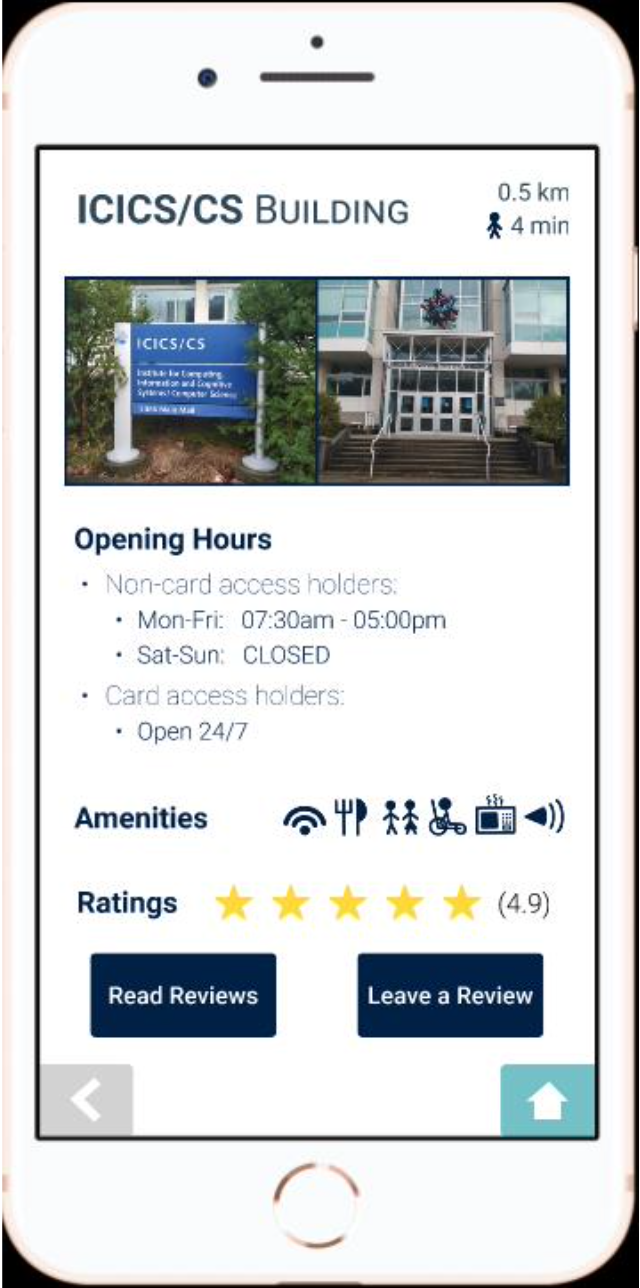
Key Features
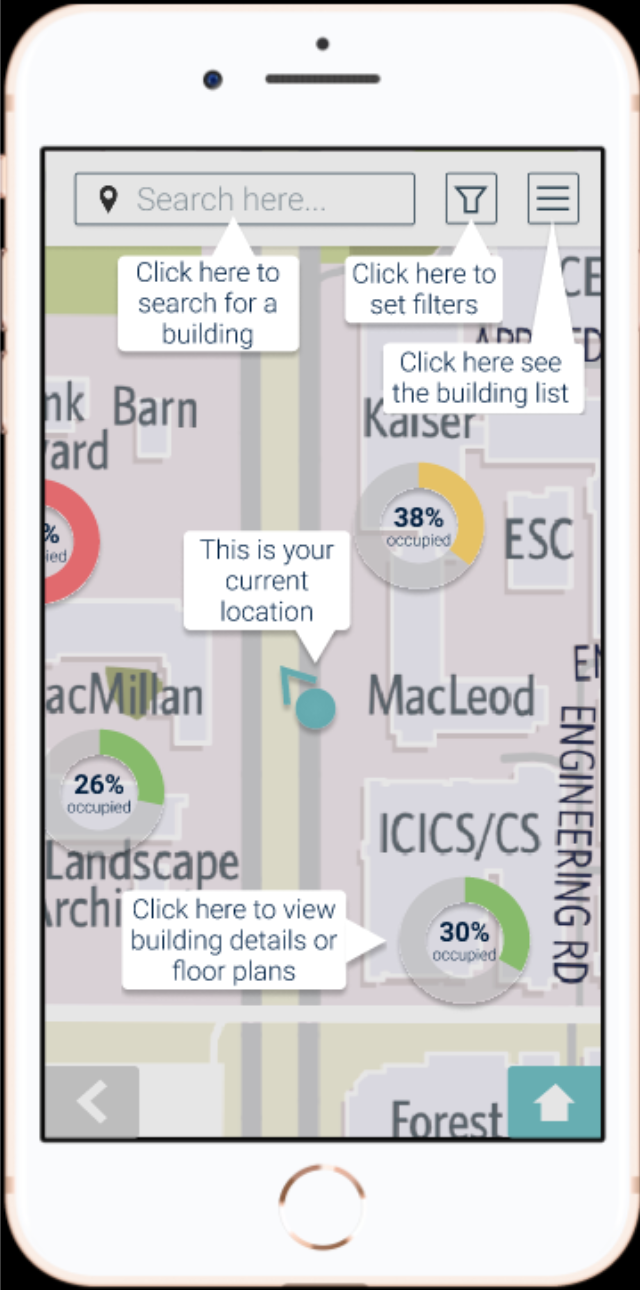
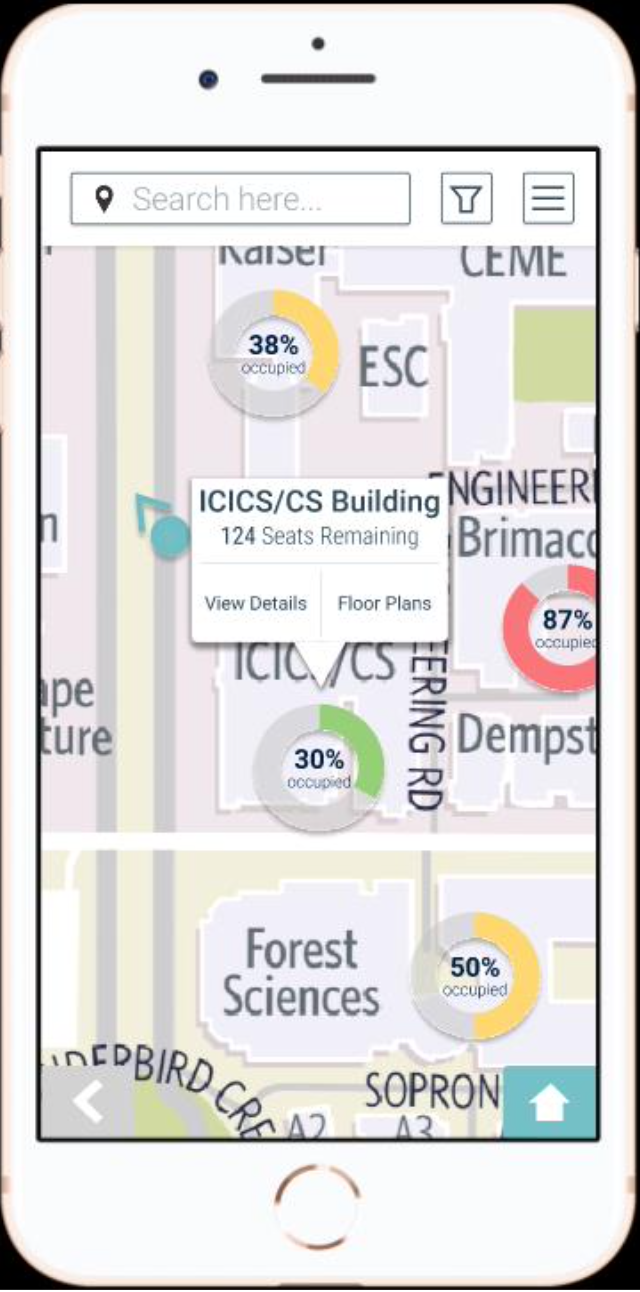
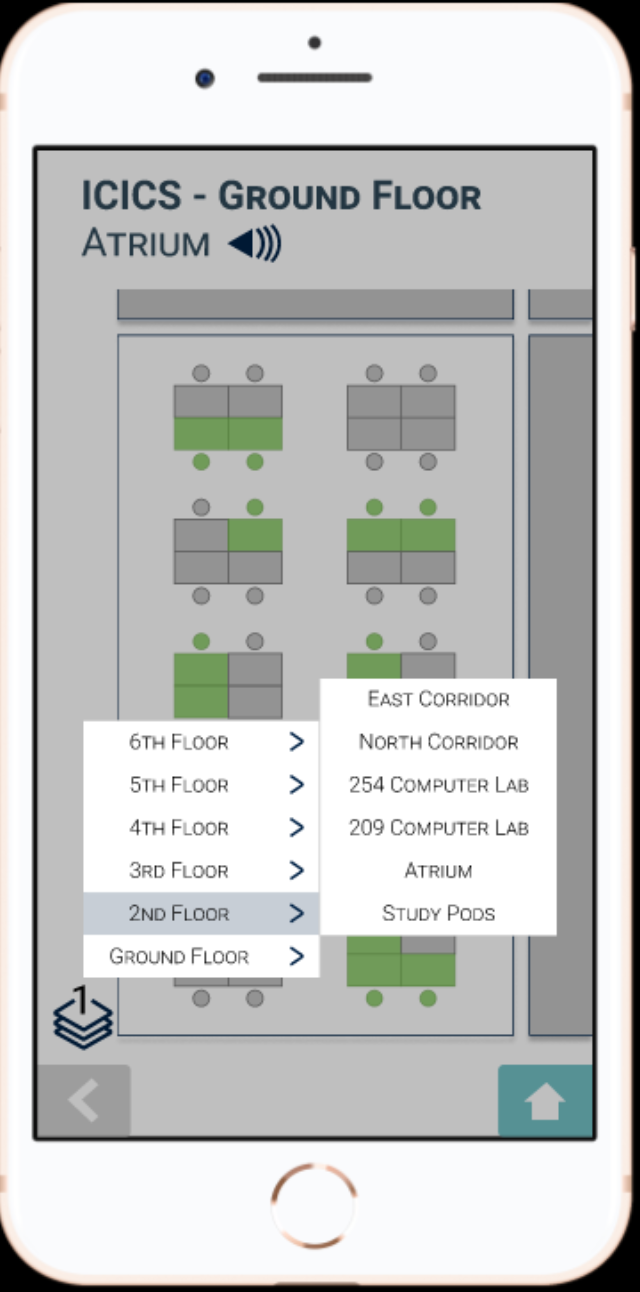
- Real-Time Occupancy: Live data on space availability for efficient decision-making.
- Comprehensive Space Listings: Includes both formal and informal spaces with filters for proximity, amenities, and preferences like quiet areas or food access.
- User Reviews: Students can rate and review spaces they have visited.
- Physical Button: To indicate the occupancy of the seat.
Process
- Research and Ideation:
- Conducted qualitative interviews and observations with UBC students to identify study space preferences and frustrations
- Defined 2 primary personas: a busy graduate student looking for efficient and quick solutions, and an undergraduate seeking to explore new study spaces for inspiration
- Analyzed user needs to establish functional and non-functional system requirements
- Prototyping:
- Iterative prototyping (low- to medium-fidelity) focused on user needs
- Low-fidelity prototyping done Wizard-of-oz style (using paper models)
- Medium fidelity prototype created in Figma, connected to a Google Sheet as database.
- An ESP8266 board was used to poll the status of a button and update the status of a test seat in the database.
- User Testing:
- Conducted usability tests with participants representing typical users.
- Results showed the app was intuitive and functional, reducing time spent searching for spaces and offering a cohesive user experience.
- Outcome:
- The Study Space Finder app received positive feedback for its intuitive design and learnability, comprehensive integration of real-time data and user preferences, and potential to save time and improve study routines.